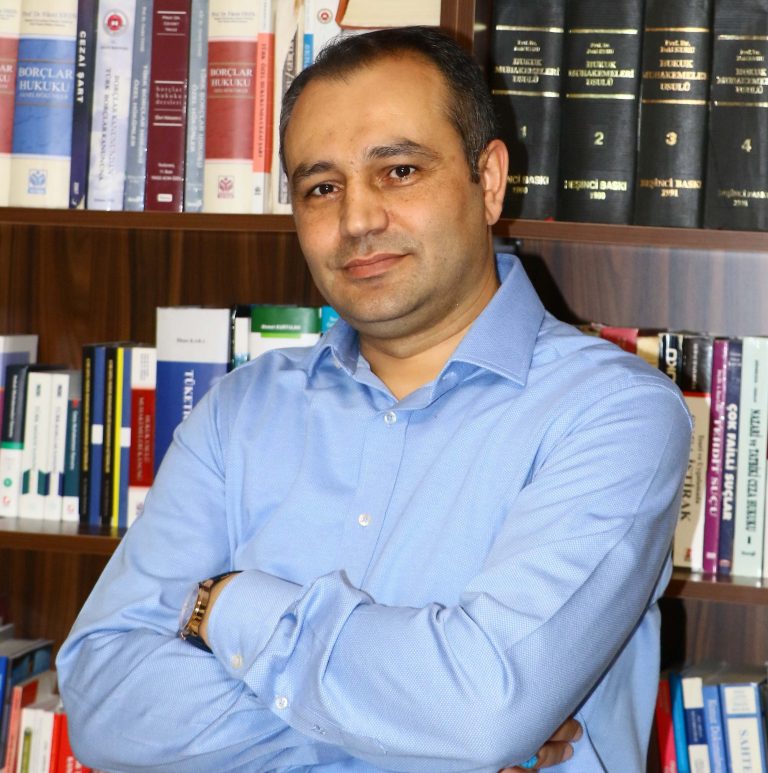
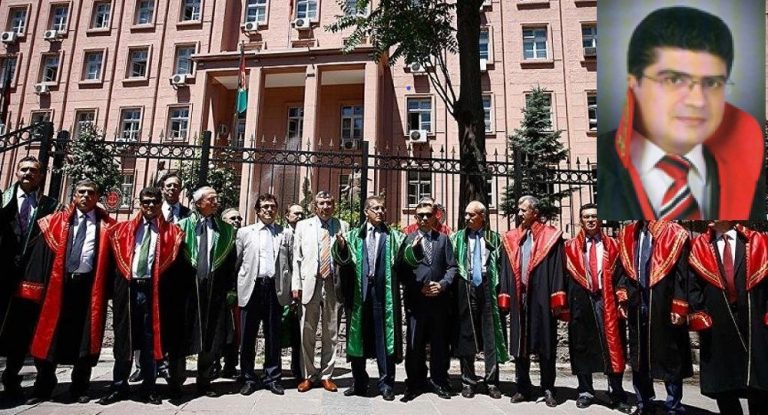
Story of jailed woman judge Sultani Temel who has been in prison with her 5 years old girl

Sultani Temel was appointed as a judge in 2013. After the failed coup attempt, she was dismissed from her profession in August 2016 for having links to alleged terrorist organisation called ‘FETO’.

Temel was taken into custody on 1/17/2017 by the Istanbul Counter-Terror Police Department where she was held in with the orders of the Tokat Province Public Prosecution Office. Subsequently, she was taken to Tokat, compelled to leave her 3-year-old daughter behind. The Tokat Prosecution Office ordered an additional 30 days of detention, where she was kept in police custody.

Temel was subjected to psychological torment during this custody period. She was kept away from her daughter and had received an extended detention time. That is the fact that; all these were to convince her to become a confessor, or to accept charges against her.

Temel was arrested in Tokat Province on 1/27/2017, after being kept in custody for 11 days in a cell where the living conditions were extremely poor and unsanitary, and mental torture was more than frequent. She was kept in for approximately 9 months in the Tokat prison with the order of an unauthorized Tokat Province Magistrate. Besides She never had lived or worked at Tokat throughout her life.

Ultimately she was released on bail by the Istanbul 27th Court of Terrorist Crimes, with the order of a “house arrest”. Temel was traumatized by this experience, particularly having been imprisoned for 9 months with her daughter left behind.

Consequently, she was diagnosed with “depressive seizures” (the doctor’s report on 3/6/2018). Hence she was prescribed a special high dose drug treatment known as Xanax (the medication instructions) There is no claim in indictment about judiciary profession life against her since the beginning of her initial trial. And there isn’t any disciplinary investigation about her profession.

Temel’s trial was adjudicated on 6/6/2018 and she got sentenced to 8 years and 9 months. She was re-arrested with the decision of the Istanbul 27th Court of Terrorist Crimes. The court dismissed all claims for her severe health problems. The house arrest ruling was lifted without any legal base, and she was sent back to prison once again. Temel’s conviction has yet to be finalized. Her case is expected to be examined by the Supreme Court and awaits its first hearing.

Her house confinement continued for 8 months until on 6/6/2018 it was abolished for reasons not disclosed by the court. The decision of an arbitrary rearrest was declared without any justification. Although her severe health problems were repeatedly brought up to the court, it was far from considered. Temel is now being kept in Erzurum prison along with her young daughter Esra since her re-arrest was made for more than a year ago.

According to the court decision, she was sentenced unlawfully and disproportionately. Temel’s psychiatric condition has increased dramatically, and her health conditions have steadily deteriorated since. Her daughter is also being punished alongside her mother.

Temel has applied to the Turkish Constitutional Court on 5/4/2017, but this application was rejected on 2/22/2019 without any legal grounds. Thereafter her case was taken to the European Court of Human Rights on 9/7/2018 for the unlawful and lengthy imprisonment. She has been in prison for a total of 23 months as of now, serving behind bars with her daughter.

Her unjustified and prolonged imprisonment continues each and every day as her emotional, physical, and psychological state proceeds to aggravate. Sultani TEMEL holds the status of remand pending appeal under the domestic law. The confinement of which has exceeded 23 months in total.

It is known that in such cases, the risk of serious and irreversible damage for her health condition can be enormous. The poor health situation threatened her life with the prison sentence of 8 years and 9 months and the right to freedom and security has been violated for an extended time.

As Sultani TEMEL lost her health as a result of her long detention, she was unable to take care of her younger daughter in prison. The Constitutional Court has not assessed nor considered whether or not the applicant would remain in prison due to her medical conditions.

Therefore, her situation in line with the right to life in Article 2 of the European Convention on Human Rights and the prohibition of torture or inhuman and degrading treatment in Article 3 as her life is feared.

The material and non-pecuniary damage suffered by her in respect of her “health and family conditions” are increasing and aggravating each passing day. Therefore, it must be respectfully requested to investigate the health problems of her, who has tried all domestic remedies, and to ensure that she can get professional treatment immediately in a specialized hospital with psychiatric services.

Purged woman judge: “..And most importantly you called a young, honest, hardworking and righteous judge a terrorist. Now, what should I be afraid of? I am not scared of you, I want my job back.”

Purged woman judge: “..And most importantly you called a young, honest, hardworking and righteous judge a terrorist. Now, what should I be afraid of? I am not scared of you, I want my job back.”

Former woman judge Sevilay Yılmaz who was expelled and detained, shared a video about 3rd anniversary of declaration of state of emergency:

“Hello, I am a judge who was dismissed two and half years ago or so. Today is 3rd anniversary of the declaration of state of emergency which we all thought would end after 3 months and the law would go back to how it was before. A state of emergency which has been going on in all its harshness despite it is said to have been officially ended.

Quite a number of very prominent jurists have been making statement on a daily basis about the violations of law which has taken place in recent years. I as a jurist do not wish to repeat them but instead say something different.

I am a jurist and I know what is called a crime, a criminal organization and a member of such an organization, as much as you all do.

I also know it is nothing but legal bizarreness being tried for being a member to criminal cyndicate.

In my eyes, the trials you have been carrying out by investigating the houses I stayed, the schools I went to, the friendships I established and the people those I have been speaking with on the phone is nothing more than a travesty.

You are in no position to judge me like the way you do. I no longer fear when I say so.

Because you have robbed me off my profession which I earned through years of toiling for years and years, you had separated me from my dear husband which I married for love, you have detained me and my child immediately after I gave birth to her after having to wait for so many years to have a child. You did not allow me to practice as a lawyer when I wanted to do so. You have done whatever you possibly could to make us to “have only tree bark for food”. And most importantly you called a young, honest, hardworking and righteous judge a terrorist. Now, what should I be afraid of? I am not scared of you, I want my job back.”

Source:

The Constitutional Court should be hope, not an obstacle, in eliminating violations of rights

0

Lawyer Levent Mazılıgüney (Translated by Freejudges)

The Republic of Turkey as a respected member of the international community authorized a large number of international courts or mechanisms, in particular, the European Court of Human Rights (ECtHR) about human rights and other disputes.

Being a part of the international community has made significant gains for our country in the fields of democracy, human rights, and law, and the international community has also benefited from our country’s experience. As mentioned below, according to Article 90 of the Constitution, international agreements have the force of law and they are superior to the law in the field of fundamental rights and freedoms.

Article 90, paragraph 5 provides that “International agreements duly put into effect have the force of law. No appeal to the Constitutional Court shall be made with regard to these agreements, on the grounds that they are unconstitutional. In the case of a conflict between international agreements concerning fundamental rights and freedoms and the laws on the same matter, the provisions of international agreements shall prevail.”

It is utterly meaningless to condemn the supremacy of international treaties and condemn people who seek their rights which arise from the agreements at the relevant international authorities.

The struggle for rights is not a complaint about our country to another country or a group of countries. The main objective is to contribute to our country by benefiting from the experience of the countries that we are or are trying to be a part of. Our aim is to fight against the violations of the rights that we face so that our children do not encounter them. In order to apply to international mechanisms, it is necessary to exhaust domestic remedies or to show that domestic remedies are ineffective. If it takes an average of 10 years to get results from international mechanisms to eliminate the violation of rights this struggle must be done for the common good of our people and future generations. The main responsibility of our country’s institutions and especially that of our judicial system should be to protect the experience obtained and not to let it go back.

It is a known reality that in our country politics has more or less influence on the judiciary in every period. The members of the judiciary have been granted much higher legal protections and rights than the ordinary citizen so that the judiciary could be free from the influence of politics and maintain its independence and impartiality. But the judiciary has not seen as much pressure before as in the last few years. Unfortunately July 15 treacherous coup attempt which we have always condemned, and the reality that while military aircrafts were in the air, 2740 members of the judiciary were dismissed and members of the judiciary were detained in the following morning then the number of judges and prosecutors dismissed from profession exceeded four thousand has a significant effect on this pressure. Can we expect justice from members of the judiciary who act in fear of being dismissed from the profession at any time? I recommend you to read Mehmet Alkan’s articles on judicial reform, especially his article titled “Did the judges make the coup?” (https://www.toplumsal.com.tr/mehmet-alkan-yazdi-yargi-reformu-4-darbeyi-hakimler-mi-yapti/) and I pass onto another subject.

We live in a country where 3722 judges and prosecutors relocated after the day of the announcement of the judicial reform package which aims to bring geographical assurance for members of the judiciary.

The Constitutional Court (CC) is the last hope for judges and prosecutors who are concerned about dismissal at any time, other professional groups and ordinary citizens as a domestic remedy against a violation of right. There is no chance to apply the ECtHR without applying Constitutional Court. If the Constitutional Court does not eliminate the violation of rights or if it is considered to be an ineffective way then individuals may apply to the ECtHR. Interestingly, the first of those who applied to the CC in our country were the former members of the CC. Alparslan Altan, who was taken into custody on 16 July 2016 with the allegation of flagrante delicto and arrested by the criminal court of peace on 20 July, lodged an individual application with the CC on 07 September 2016. The CC ruled that there is no violation of rights and rejected the applications on the grounds that they were “manifestly ill-founded” on the application of Alparslan Altan and Erdal Tercan the other former member who experienced the same process. However, ECtHR in its judgment of 16 April 2019, about Alparslan Altan (App. No: 12778/17) held that the detention was unlawful and Article 5, paragraph 1 of the European Convention on Human Rights was infringed, and the Court awarded the applicant a sum of EUR 10,000 non-pecuniary damage. I evaluated the details of the subject in my article entitled “Initial Assessments on ECtHR’s Alparslan Altan/Turkey Judgment” (https://www.meridyenhaber.com/aihmin-alparslan-altanturkiye-karari-uzerine-ilk-degerlendirmeler-makale,44704.html) I translated the ECtHR’s / Alparslan Altan judgment into Turkish and this translation (https://hudoc.echr.coe.int/fre?i=001-194102#{%22itemid%22:[%22001-194102%22]}) was published on the ECtHR webpage. I strongly recommend to my readers to read these texts and I want to switch to another topic. However, I would like to state that I do not agree with the Constitutional Court and that I fully agree with the ECtHR’s judgment. I do not consider that the judgment of the ECtHR is sufficient. The most important point that I consider insufficient is that the ECtHR still considers the CC as an effective domestic remedy.

Unfortunately, the CC has disappointed me and many of my colleagues. The biggest disappointment was the dismissal of Alparslan Altan and Erdal Tercan on August 4, 2016, by a resolution of the General Assembly, by showing no legal reaction to the custody and detention of them which were taken without following the legal rights and the special procedures granted to them. When the CC dismissed its own members with a procedure not included in any legislation, it has paved the way for the dismissing tens of thousands of public officials from their profession with strange criteria such as institutional opinion and social environment research. The members who participated in the General Assembly of the CC have the responsibility of not only their colleagues they have dismissed from the profession but also the tens of thousands to be dismissed later on.

I consider that the CC is not an effective domestic remedy and it caused an increase of victimization of those who cannot express themselves in the Country. Because, before and after these developments, the CC showed by its numerous judgments some of which was and would be on the agenda of the international public opinion especially the ECtHR that it is not an effective domestic remedy.

I see the CC as an obstacle which causes a delay in lodging of ECtHR applications. Unfortunately, I saw one thing among the judgments that reinforce my opinion in the databank which can be accessed from the CC website. When I entered the web page to review the Alparslan Altan judgment on June 27, 2019, I saw some parenthetical statements saying that “that will be used for applications in the context of Parallel State Structure (PDY)”. The statements in question contain the phrase “manifestly ill-founded”. The result phrases were the same in almost every file except for the show applications that I mentioned. To summarize, there was no infringement decision or I could not see them except show individual decisions.

Because of the parenthetical expression and the results of the Court’s decisions I came to this conclusion that what the Court demonstrated was bias. However, instead of sharing this opinion immediately, I discussed the subject with many masters who are still working and who are dismissed in my opinion, not because of the FETÖ / PDY, but the judgments they gave, the candidates they supported in the elections of HSK and etc. The consensus was that the statements on the CC’s web pages would be understood as bias and were problematic in terms of the principle of “objective impartiality” (obligation to appear impartial) which the courts had to protect in all circumstances. The commentary of my master, who made the most moderate comment, was that this situation would give rise to the suspicion that the CC could finalize the applications with the influence of the previous judgment in applications similar to those of Alparslan Altan and this would be a violation of the principle of impartiality. The majority of my professional masters described the parenthetical expression as “scandal”.

When I looked at the site again, I saw similar notes classified according to occupational groups and intervention allegations and I could not see any infringement decisions except for show applications. When I looked at the Html code of the page, I saw that there were 37 different classifications. I came to this conclusion by taking into account that the same parenthetical note included in the 37 different intervention allegations and there were no infringement decisions except for show applications that the CC demonstrated bias.

As a lawyer, I have also some templates regarding defenses. There are a few paragraphs in my templates that I have prepared with reference to some judgments of the Court of Cassation for example, for the situation “where the assertion regarding ByLock usage is based solely on the operator record and the operator record contains technical errors”. But no lawyer prepare a petition only consisting of templates. A similar situation is often seen in high courts.

There are templates with different names that are circulated orally or in written among investigating judges and reporter judges. However, as I mentioned, these formulas are for specific events. Although they aim to ensure the unification of case law, it is not possible to talk about unification of case law specific to the organization. There could be the unification of case law for the abstract and general events and claims related to common situations. Within the CC, there may be persons in charge of “research-caselaw” (shortly called RECA) who classify the reference judgments and communicate them to the reporters verbally or on their internal networks.

Formulas referring to past judgments may be prepared for the various possibilities of the alleged membership of the Armed Terrorist Organization. However, I have never seen any which was prepared specifically for instance, for Kurdistan Workers’ Party (PKK) membership. Where there is no distinction for any other organization; the distinction for only PDY is not different from different classification of any human race. Law should be applied equally to all people regardless of what they are charged with. Because the use of templates is controversial enough and it has caused dozens of negative examples experienced by every lawyer, the use of classification and templates for a particular organization and occupational groups is a demonstration of bias in my opinion. The way it looks on the web page can be called as “scheduled judgment”, as I mentioned in my social media sharing.

Democracy is not just a ballot box. The control of Public opinion is extremely important in democracies. The public opinion can ask questions and convey criticism at any time and any grounds by paying close attention to style and procedure. The CC which should be the ultimate protective authority of these rights and freedom of expression can be criticized too. It can also be harshly criticized to draw the attention of public opinion.

I used this right on my social media account and expressed my thoughts and evaluations without hesitation and I criticized harshly. My evaluations were a synthesis of many interviews I had about 24 hours after my first encounter with the statements and they were supported by screenshots. My main objective was to raise the topic, to initiate a strong and qualified discussion and to draw the attention of public opinion about the stereotype judgments in the frame of the principle of objective impartiality.

My assessments about the bias of the CC have a broad repercussion. After my social media sharings, it was seen that the objective impartiality of TCC is highly controversial. People from almost all walks of life, legal scholars, politicians, artists, etc. think that the CC cannot decide impartially and independently. And they also evaluate the statements on the website of the CC as bias.

The CC closed the site access instead of making an explanation. After sharing the archive site, the site was reopened. I wish it wasn’t like this. This caused more questions. The following morning, the CC made an explanation on its social media account. The explanation is read exactly as:

“Some people shared their opinion on social media that the CC demonstrated bias, therefore the applications will be rejected based on the statement “that will be used for applications in the context of Parallel State Structure (PDY)”. This statement was added to the information form to classify for facilitating the examination of the individual applications of the persons who have been processed for alleged PDY connection and to facilitate the access to the judgments given on this issue.

The claim that the CC demonstrated bias is completely unrealistic. As a matter of fact, the same statement is given in the information form related to infringement decisions listed which belongs to the applicants who have been tried for the alleged PDY connection. It is possible to access these judgments and information forms from the databank of the Constitutional Court by using the information provided in the list.”

Following these statements, unfortunately, the applications that I described as show decisions were given as an example. In addition, the expression “to classify for facilitating the examination” was unfortunately problematic. To admit classification for an organization is not different from to admit classification for a human race. Another problematic issue is that there are 37 different classifications referring to the PYD and judgments are searched according to this classification in the database.

However, when we choose the statement “that will be used for applications in the context of Parallel State Structure (PDY)” in the context of the arrest of military personnel we face with 2 (two) judgments that say there is no infringement. But when we chose the same phrase in the context of the process of lawyers we can not reach any decision. There are other options about which there are no decisions. That why it is necessary to classification for judgments that have not been decided is another question mark and this situation reinforces the perception that the judgments of the CC about waiting trials are ready.

The good thing was that I had achieved my primary goal and that, besides the discussion of an important issue, the CC made a statement in a democratic manner and in legal parlance befitting its institutional maturity. The CC served as a model with the explanatory style in relation to a discussion on the agenda of the public opinion. After all, our aim is not to wear away our institutions.

Our aim is to contribute to the establishment of the rule of law with all universal principles, that is urgent, essential and continuous need such as bread and water. From this point of view, we can discuss some judgments of the CC, whether a template is used or not, and the disadvantages of the possibility of being used.

Having emphasized the need to re-consider the judgment of the CC regarding its members, I would like to state that I have examined dozens of the CC’s judgments at the weekend. In dozens of judgments, unfortunately, there were many repetitive sections that could be described as a stereotype. There was no infringement in the judgments that could not be described as a show decision. If necessary, these judgments may be discussed in more detail in the future, but there are some examples that need to be considered.

There are numerous judgments of the CC regarding the individual applications of judges and prosecutors who do not have the right to apply to the State of Emergency Commission. Although they do not have the right to apply to the State of Emergency Commission The CC directed them to the Commission and therefore rejected their applications illegally.

A prisoner gets no notification about the judgment regarding the continuation of his arrest for 2 months. In one case the decision of the court regarding objection to arrest was notified 6 months later. In the other case, the judgment regarding the continuation of arrest is notified 8 months later. The CC ruled that there was no violation in each application. The use of fundamental rights and freedoms of the applicants is not protected by the CC and it is timid in decision making.

There are also obvious material mistakes due to using the template. For example, as in Ahmet Kart (Second Division, Second Commission,29/12/2017, app no: 2017/12197), Zakir Tütüncü (Second Division, Second Commission, 09/03/2018, app no: 2017/21109), Ali Bulutyaran (First Division, Third Commission, 09/03/2018, app no: 2017/21109) judgments, Although these people detained before 15 July 2016, their applications evaluated as if they detained after 15 July and due to coup d’etat attempt. Actually, these kinds of judgments create suspicions about the accuracy of the individual examination process and good faith.

In a judgment about the journalist Hasan Taşar (First Division, Third Commission, 24 July 2018, app. no: 2017/37822) although the court of first instance didn’t give its verdict in the date of hearing, moreover the court dated the next hearing on 30-31 July 2018 upon request of defendants for preparing their defence, the CC decided as if the court of first instance sentenced him on 18 May 2018 and the reasons in this verdict were lawful.

As is in Zekeriya Yılmaz Judgment(Second Division, Third Commission, 27/07/2018, App. No:2017/2091) who is a member the Court of Cassation, although there wasn’t an allegation about the usage of bylock program, judgment talked about bylock as if he had used bylock. This decision contradicts the contents of the case file and supports the idea that there are copy-and-paste decisions.

Where there are false allegations in a judgment which is about a Judge of the Court of Cassation and this judgment is signed by members of the CC, then it is quite normal that ordinary citizens could worry.

As the defense lawyers, it is our duty to stress insistently, before the international courts, in particular, the ECtHR that the CC is not an effective domestic remedy anymore. Indeed, the UN Human Rights Committee in its İsmet Özçelik-Turgay Karaman/Turkey judgment  (28.05.2019, com. no; 2980-2017) stated that the CC is not an effective domestic remedy.

It is certain that the members of the CC are experienced lawyers. They gave judgments in accordance with laws and their inmate convictions. When the members of the CC encounter and make eye contact with the wives or children of the 2 members they dismissed from the profession by the decision of the General Assembly while looking at the shop windows in a shopping mall they will return to their conscience. Of course, when they put their heads to the pillow they face with their conscience, possibly they face with their conscience every moment.

Who knows, maybe not the members themselves but one of their wives might have been encountered and chatted with the dismissed justices’ spouses or kids. Perhaps they are sad because the wife of the one of the dismissed judge had a severe illness and they could not visit her during the treatment process and perhaps they are planning a visit to ask for their blessing.

Members of the CC will come together and discuss what should be done to protect the rights of each ordinary citizen and to act in accordance with the principle of objective impartiality, instead of ruling show judgments. After all, aren’t these our common purpose? Our common purpose is to ensure the rule of law with its all universal principles. The CC should be hope for everyone, not an obstacle for people seeking their rights.

To reach the original article in Turkish, please visit: https://www.meridyenhaber.com

Editor of Freejudges, former judge Kutlan Menderes Elmas and his wife former judge Basak Elmas shared a video over the third anniversary of the July 15 coup attempt in Turkey

The editor of Freejudges website, former judge Kutlan Menderes Elmas, and his wife Basak Elmas, who is also a former judge, expressed their thoughts about the July 15 coup attempt.

In the video, Mrs. Elmas explained that her career was full of success and all her promotions were with excellent degree. She also added that even though she had been a dedicated judge, their lives had been devastated without any single concrete complaint.

Mr. Elmas said that all the truth behind the July 15 coup should be revealed and this may only be accomplished through independent and fair trials. Remarking the following developments of the July 15 coup and how President Erdogan have transformed the secular, constitutional democratic republic into a one-man-rule state, he defined the whole process as a series of real coups. As his last words, he condemned all groups and persons who undermined the rule of law and dragged Turkey to the July 15 incident as well as the coup itself. Also he criticized the important actors who remained silent when Erdogan was re-designing the country.

You can watch the video by clicking on this link:

118 ‘High court judges’ sentenced up to 14 years in prison over the pretext of terrorism charges, while only two judges could acquitted as of 12 July 2019

0

As of 12 July 2019, 118 high-court judges have been sentenced up to 14 years in prison over the pretext of terrorism charges, while only 2 of them were acquitted. Yet, 68 cases are still pending.

A day after July 15 controlled coup attempt, arrest orders were issued for 188 high-court judges. They have been detained and kept in solitary confinement cells since then.

Source: https://www.memurlar.net

Nine judges suspended by the Council of Judges and Prosecutors over allleged links to Gulen Movement

0

Nine judges were suspended from profession by the Council of Judges and Prosecutors on 12 July 2019  within the scope of investigation over their alleged links to Gulen Movement.(1)

So far, almost 5000 judges and prosecutors have been dismissed and most of  them were detained in the context of terrorism charges since July 2016.

The names of suspended nine judges are listed below:

General judiciary:
Selver Öztürk Taşdelen -Gaziantep
Zeynep Ergün -Erzurum
Hülya Yıldıztay Kavak -Antalya
Dilek Işık Cantepe -Denizli
Adem Narçin -İstanbul
Ekrem Karaçimen -Kastamonu

Administrative judiciary:
Muhamet Said Dumanlı -İstanbul
Mustafa Mücahit Berkbilek -Sivas
Mücahit Fatih Albayrak -Kocaeli
Hülya Yıldıztaş –  Antalya (2)

Sources:
1-  https://www.memurlar.net
2- https://www.son.tv

Former woman judge Ayşe Neşe Gül, ran for the High Council of Judges and Prosecutors and her husband former prosecutor Cevat Gül sentenced to 10 and 8 years 9 months in prison on 12 July 2019

Former judge Ayşe Neşe Gül, one of the two women candidates for High Council of Judges and Prosecutors in 2014,  was sentenced to 10  years in prison, while her husband and former prosecutor Cevat Gül was sentenced to 8 years 9 months in prison on 12 July 2019 over the pretext of terrorism charges.
The court also ruled for continuation of their detention. They have been kept in solitary confinement cell in prison since July 2016.

Source:
https://www.memurlar.net

Spending his 1000th Day in a Prison Cell, the Short Story of a Supreme Court Judge Husamettin Ugur

Member of the Court of Cassations Hüsamettin Uğur, who had been arrested just after the July 15 coup attempt, completed his 1000th day in his solitary-confinement cell in prison by April. Hüsamettin Uğur is one of the hundreds of  supreme court judges who had been blacklisted by the government long before 15th July 2016 to eliminate and reshape the judiciary according to the ruling party’s political interests. Mr. Uğur was among the judges who were targeted by Erdogan’s government because of their opposite decisions regarding judicial independence and rule of law. He was one of the participants of the protest in front of the Court where they were protesting the recent law through which the supreme courts in Turkey had been reshaped and all supreme court judges had been dismissed in order new ones to re-selected.[1] He also had opposed the law and shared his ideas with the public via his social media acoount.[2]

Dilara Uğur, daughter of Hüsamettin Uğur, who is a noted lawyer and the author of Tax Crimes (Vergi Suclari in Turkish), shared on her twitter account about what happened to her father just after the 15th July. Her words are as below:

“Mr. Uğur and many other supreme court judges were arrested in the morning of 16th July against the provisions of the Turkish Constitution and the statute regarding the procedures of prosecution about them. During the custody, they were given no food or water for the first 35 hours. After spending four days in custody, they were taken to the court for pre-trial hearing. They had been made wait and spend the night in the court halls with handcuffs on their wrists. Nothing was given to them for sleep, and they tried to have rest by leaning to each other.

After the judge ruled for their detention, they were sent to Sincan Prison. 30 detained were put in the same room planned for only eight inmates. Because of the lack of beds, they had to share the beds and tried to sleep alternately in order. On 9 October 2016, without informing them or their families, all supreme court judges were transferred to newly-built Keskin Prison in Kirikkale Province near Ankara. Since it was just completed, Keskin Prison was full of construction dirt, and the judges were sent there without cleaning. All judges were put in separate cells all alone. Since then, they have been residing in those solitary confinement cells. They had no water for the first two days, were not let use the courtyard. The judges have been under physical and psychological ill-treatment. As a few examples would given as follows:

–          Water cuts have continued since then.

–          During the cold months, hot water had been provided just one hour in a week.

–          The prison administration did not sufficiently run the heating system in winter.

–          While the other prisoners had enjoyed the social and sporting activities such as football and watching movies, the judges were deprived of such rights.

–          They were not given books for the six months, after when they have been allowed read only three books each month.

Mr. Uğur was kept under pre-trial detention for a long time; His first trial hearing was after 17 months. But this time, his defense was interrupted several times by the chief judge. Whenever he wanted to continue his speech, his microphone was switched off. On 28th February 2019, Mr. Uğur was sentenced to 10 years 6 months of imprisonment for “membership of an armed terrorist organization.[3]

The last sentences of Judge Uğur’s defense at the last hearing was a great summary of their story: ‘Oh you gentlemen having the power of accusing and trialing! Regardless the possible outcome, I had never let anybody or institution to intervene in my profession. For this particular reason,  I and my colleagues were announced as terrorists, dismissed, and detained in one night. Despite that our souls are free and we contunie our lives with honor and dignity. They selected you for your current posts after us just to abuse you for their political interests. I am not going to make any comment about you. Your verdict will be given by Turkish Nation and history.”[4]

[1] https://twitter.com/hugur23

[2] https://twitter.com/hugur23

[3] https://www.haberler.com

[4] https://twitter.com/nalandilora

MEDEL denies the Union of Judges’ Request for Membership – The Union’s Test Over Law and Justice

Two weeks ago, board member of dissolved YARSAV and former Judge Murat DURMAZ from his personal social media account shared the news that the application made by Turkey’s Union of Judges (The Union in Turkish) to MEDEL with the request of observer and membership was rejected at the meeting held in Prague on 22 June 2019.[1] The rejection letter briefly includes as follows:

  • YARSAV, which still is a member of MEDEL, did not consented to The Union’s request and therefore, no new member can be accepted without YARSAV’s represantatives’s consent,
  • The Union, has not shown sufficient and active effort to defense for the expelled and detained colleagues’ rights,
  • Due to the difficulty for obtaining reliable information from inside the judiciary, MEDEL has not been able to check whether the thouands of new pro-government judges and prosecutors, who have been appointed during the post-15 July period, have infiltrated in the Union,
  • Having regard to that undesirable possibility, granting such a union even observatory status would not be consistent with MEDEL’s strive and fight for the dismissed Turkish colleagues,
  • No other union or association from Turkey should be accepted by MEDEL as a member until the circumstances in Turkey returns to normalcy and all expelled judges and prosecutors are reinstated,

Resorting above-mentioned grounds, MEDEL denied the Union’s membership communication.[2]

On this occasion, I wanted to share my notes and thoughts over the Union of Judges (the Union), the second association established by the members of the Turkish judiciary.

Established on 16.11.2012, the Union, whose current president is Judge Ayse Sarisu Pehlivan and the Secretary General is Ibrahim Fikri Talman, has taken a political or at least cyclical stand rather than prioritizing the legal principles, particularly since the July 15 coup attempt, which is a vital cornerstone for the Turkish judiciary.

The Union did not react when 2845 judges and prosecutors, accused of “attempting to overthrowing the government ” during the night even when the coupers had not been identified yet, were unconstitutionally and unlawfully taken from their home or office and exposed in front of the media and public. Furthermore, the Union closed its ears and eyes to the voices of colleauges’ detained, died in prison, or got deadly sick because of the prison conditions. The worse is that the Union, like the Turkish Bar Association, with some individual exception, the Union did not respond to the mass and systematic violations like unlawful and extensive detention, torture, or ill-treatment, against which all the international community spoke out. I have not been able to find any comment from the Union even on the question of the removal or detention of its own members.

While some judicial associations and many judges in Europa faced prosecutions for the reason of organising events and campaigns in order to help Turkish judges and their families as a means of solidarity, the Union, aside from solidarity, did not make any effort regarding their removed colleagues’s rights to work in private sector.

International responses to the Turkish State such as those coming from the several branches of the European Union, the Council of Europa, and international judicial organisations, and even the last decision of the ECoHR in Alparslan Altan case could not change the Union’s stand. Whereas the cases brought by the dismissed judges before the Council of State have been pending for almost three years and the complaints have been rejected by the Constitutional Court wit no Legal ground, the Union has only spoken out against unlawful transfer of some members of the Union.

In addition, it was claimed that some members of the Union who have attented the meetings with foreign delegations visiting Turkey to observe the trials of the judges and prosecutors, talked against their tried colleagues and accused them by using the government’s arguments and tools, which includes no individual, lawful, concrete evidence but hearsay. This type of manner reminds everybody of Mr. Metin Feyzioglu, who publicly and behind doors acting as an attorney of the Turkish Government.

While I do not know the Union’s purpose of its application before MEDEL was to maintain YARSAV’s role within the judiciary, or to obtain the seat that they assumed YARSAV vacated,  I hope MEDEL’s denial to be a good chance for all of us including the Union to understand the message.

It is obviously their decision if they would like to continue as a small union affiliated with politics and aiming only to defend their members’ rights at the political level. However, if they would like to receive respect from both inside and outside the country as a real judicial union, they should defend and oppose, at least as much as the european organisations do, for the fundamental principals such as rule of law, constitutional democracy, seperation of powers, judicial independence, secure of judgeship, and right to fair trial, and should make clear their stance in terms of the problems that the Turkish judiciary and its members have been struggling with.

No need to say that the problems within the judiciary in Turkey did not start with the July 15 coup attempt, nor would they end completely in the future. But expecting respect and esteem without doing anything for almost 5000 colleagues, who have been subjected to massive violation of the basic rights, is not just a vain wish, but also showing disrespect for the sincere efforts of the colleagues and organisations particularly in Europa.

In a country governed by the rule of law, nobody is above the law including the members of the judiciary and state executives, and therefore anybody who commits a crime should be tried by independent courts. It is also, however, not an option for anyone to disregard the procedural rights determined by the constitution and the statutes. During the dark and hard times, members of the judiciary are the ones who have to protect and advocate the rule of law at most since they act on behalf of the people and get their power from the people.

On behalf of the Freejudges Initiative and of myself, I strongly support the idea that Turkey should immediately return to the parliamentary democracy based on constitutional plurality, and also the idea that the judiciary should be administrated by the representatives of the members of the judiciary itself under the same principles. It is also undoubtedly necessary that the judiciary should not be dominated by any group including the ruling executive power. As my final word, I would like to point out that we are ready for sincere contrubitions so as to catch the westernal, secular, and universal judicial standards.

Kutlan Menderes Elmas

[1] https://twitter.com/muratdurmaz101

[2] The full text of MEDEL’s decision see: https://twitter.com/muratdurmaz101

Former judge Mesut Orta, who was also prosecuted for getting financial support from EAJ, sentenced to 7 years 6 months in prison on 2 July 2019

Former judge Mesut Orta was sentenced to 7 years 6 months in prison on 2 July 2019 over the pretext of terrorism charges.

He was also prosecuted for getting financial support from EAJ after his dismissal

Judge Mesut Orta, for whom an arrest warrantwas issued following the 15 July coup attempt, did not turn himself in for a while and hid at another place. Later, it turned out thathe received some amount of financial support from the European Association of Judges (EAJ) for his family’s needs when he was hiding.  The e-mails as to their communicationwere found in his computer when he was arrested later on in Diyarbakir Province of Turkey.

Accordingly, it was found out that 1300 euro was transferred to the account of Mr. Orta’s wife through two separate transactions by Stuttgart prosecutor P.S., who is a member of EAJ as well. The media outlets under Erdogan’s control alleged that the German prosecutor, via the money, helped Mr. Orta escape from justice. Judge Orta, who has been under pre-trial detention over terrorism charges, was also prosecuted for the monetary support he took from EAJ. According to the press, beside judge Orta, the EAJ and Stutgart prosecutor P.S., leading to the transfer, were also included in this investigation.Yet, what has been decided over the investigation against those who received support and the european colleagues who provided help and showed their solidarity is not known.

During his arrest, police officers put a gun in his mouth and beat him!

It was alleged that Diyarbakir Police tortured judge Mesut Orta and his friend dismissed prosecutor Hasan Yalçın when they were caught and arrested in a house in Diyarbakir where they had been hiding since July 2016.

It was claimed that police officers, during the raid, hit Hasan Yalçın’s head with their boots. Yalçın was injured on his face and it was reportedduring the health control at the hospital. Besides, another officer put his gun in Mesut Orta’s mouth after laying him downwith kicks.

Who is judge Mesut Orta?

Beginning his judicial profession as a criminal judge, Mesut Orta was then appointed to the Data Processing Department of the Justice Ministry as a rapporteur judge due to getting computer programming degree beside his law career. Then in 2011, he was appointed as the head of the department.He was the leading person of the installing and developing the software of UYAP (Turkish e-justice system). The system called UYAP was many times awarded by several international institutions including the United Nations. Getting his PHD degree in information technologies and having books published in this field, judge Orta had given lectures at different universities and the Turkish Justice Academy.

Judge Orta and his friend prosecutor Yalcin officially complained about the police officers for insulting, torture, and ill-treatment; However, the Prosecutor’s Office of Diyarbakir dismissed their complaints and gave non-prosecutiondecision about the acccused officers. The prosecutor’s office had sought 22,5 years sentence in prison for judge Orta for managing an armed terror organisation duringhis service at the Justice Ministry. He was acquitted from establishing and managing terror organization, but found guilty for membership of the organization.

Sources:

https://www.memurlar.net

Investigation launched into Stuttgart prosecutor and financial support given by EAJ to wife of jailed judge Mesut Orta

When the judge Mesut O. was detained, police officers put a gun in his mouth and beat him!