Former judge Hamza Eyidemir, former member of Council of State (Supreme Administrative Court), was sentenced to 9 years in prison over the pretext of terrorism charges on 2 October 2019. Furthermore, court ruled for continuation of his detention. He has been kept in solitary confinement cell in prison since July 2016.
Source:
https://www.memurlar.net
Former judge Hamza Eyidemir, former member of Council of State, sentenced to 9 years in prison on 2 October 2019
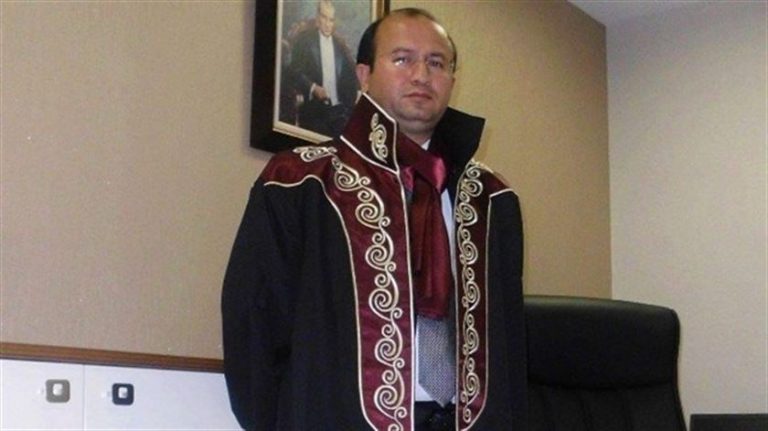
Former judge Mehmet Ali Duran, former member of Council of State, sentenced to 9 years in prison on 1 October 2019

Former judge Mehmet Ali Duran, former member of Council of State (Supreme Administrative Court), was sentenced to 9 years in prison over the pretext of terrorism charges on 1 October 2019. Furthermore, court ruled for continuation of his detention. He has been kept in solitary confinement cell in prison since July 2016.
Source:
www.memurlar.net
Former judge Bülent Kılıç, former member of Council of State, sentenced to 7 years 6 months in prison on 1 October 2019

Former judge Bülent Kılıç, former member of Council of State (Supreme Administrative Court), was sentenced to 7 years 6 months in prison over the pretext of terrorism charges on 1 October 2019.
Source:
Https://www.memurlar.net
Is it fair that Judges and Prosecutors in Turkey are Held in Isolation? The ECtHR’s Bora v. Turkey Decision

On 15th of July 2016, just five hours after the controversial coup attempt began in Turkey – a time when the responsible could not possibly be determined – the Prosecutor of Ankara appeared on NTV channel to declare that 2,745 judges and prosecutors were to be arrested1. Since then, 4,560 judges and prosecutors have been dismissed from their duties and 2,728 arrested without according right of defence2. For 680 of these arrested judges and prosecutors, another type of mistreatment has been executed: they became isolated and imprisoned in separate cells without any appropriate reason or justification. One of them, Ayhan Bora, applied to the European Court of Human Rights (ECtHR) regarding being kept ‘under isolation’ in prison, which is in fact against domestic and international law.
The ECtHR analyzed Bora’s application under the article 3 of the European Convention on Human Rights, which prohibits torture and inhuman or degrading treatment or punishment. For a case to be found in violation of Article 3, the mistreatment must attain a minimum level of severity based on all the data available; for example, the gender, age, medical conditions of the victim and the detention conditions.
The Erdogan Government stated in its defence that applicant Bora was arrested for “membership to a terrorist organization” and that the decision of isolation was for security reasons “in accordance with the 9th and 111th articles of the law no. 5275 on the execution of penalties”. Law no. 5275 lays down the procedures and rules concerning the execution of penalties and security measures, with the articles respectively outlining who can be held in high-security institutions and where remand orders are to be implemented.
The ECtHR found that Bora received regular medical attention, the physical conditions of the cells were sufficient, and he was allowed ventilation for one hour per day with two other inmates accompanying. For a precaution like isolation to be justified, it must be examined within the conditions of the case, the severity of the precaution, its duration and its purpose. If deciding to extend the duration of the isolation, authorities must ensure that the evolutionary conditions, the situation and the attitude of the inmate are considered. After mentioning those guidelines, the ECtHR indicated that Article 3 was not violated as the situation did not reach to the minimum level of severity. However, the court warned that this decision is not a permission for the Turkish Government to make the inmates serve all their sentence in these conditions. The detention conditions should be improved day-by-day otherwise that situation could amount to a violation3.
The decision of the ECtHR is far from being lawful regardless of the government’s defence and the justifications that the court has indicated. As the main ground of this measure in the domestic law, the law no. 5275 regulates who would be sent to the high security prisons and who could be kept under isolation. According to the article 9(2)(e), those who are ‘sentenced’ of being a member of a terrorist organization would be sent to high security prisons. In the 3rd paragraph of this article, it is stated ‘arrested’ persons can be sent here if they are “those who are in a dangerous condition due to their actions and attitudes and whom it is determined must be kept under special control and supervision and those who violate order and discipline at the institutions in which they are kept or who insist on resisting measures, instruments and procedures of rehabilitation shall be sent to these institutions”.
Law no. 5275 further explains that “cell punishment or solitary confinement” can be applied for those “who are convicted to heavy life sentence” according to article 25(1). Article 44 lists other acts punishable by solitary confinement, such as attempting to escape, stage a riot, attacking other inmates or staff. But even these cases, confinement can only continue for a maximum period of 20 days if the seriousness warrants it. Therefore, it is completely against domestic regulations that isolation is applied to the arrested judges and prosecutors who were not convicted of a heavy life sentence, who do not possess a concrete danger to be put in a high security prison and who have not received a punishment under Article 44. These decisions of isolation, which are applied arbitrarily and without court approval, clearly have the purpose to torture and psychologically damage.
In addition, it is stated in the Turkish Constitution that no one can be discriminated against (Article 10), everyone’s pecuniary and non-pecuniary possessions will be protected (Article 17), any unlawful punishment cannot be applied (Article 38). In Article 15 of the European Convention on Human Rights – derogation in time of emergency – it is specified that the situations in which a State may validly derogate do not allow for precautions that are against Article 2 (the right to life), Article 3 (the prohibition of torture), or Article 4 and Article 7 (no crime and punishment without law). In other words, there is absolutely no justification for torture or arbitrary punishment.
In the 17th paragraph of the Bora v. Turkey decision it is said that “the social and complete emotional isolation of an inmate can destroy the personality and thus, it can form an inhuman treatment. On the other hand, the isolation punishment itself for the security issues, the discipline and protection do not form a punishment and inhuman treatment. While examining the measure under the scope of the Article 3 in a specific case, the conditions of the case, the severity of the measure, its duration and purpose should be considered.” Despite this, the clear unlawfulness – which cannot be justified by the domestic law nor is based on any court verdict or decision – of the measure is ignored. Due to the aforementioned reasons, the outcome of the Bora decision remained obviously quite below than the human rights standards of the Turkish domestic law regarding the conditions of detention let alone the standards set forth before in the jurisprudence of the ECtHR.
The prison authorities who apply such punishment under pressure by the Erdogan government know very well that there is not a single concrete reason about the arrested judges that require the isolation precautions to be applied, so they do not request any decision about this from the execution courts and continue to apply it arbitrarily. The judges and prosecutors arrested without any concrete evidence and sufficient suspicion are held under much more difficult conditions than other inmates, and for a long time. While others can use the ventilation with the rest of the inmates for 12 hours a day, they are allowed only for an hour per day. They are deprived from all social activities, from eating, speaking and spending time with the other inmates during the remaining 23 hours. Many judges and prosecutors are imprisoned with these heavy conditions for approximately 18 months. Unfortunately, authorities who apply these conditions will be encouraged by the decision of the ECtHR.
On top of all this, applying a precaution or a punishment under isolation is an exceptional practice which must have limits regulated by international arrangements. In the report Safety and Security of Human Honour in Prisons, supported by the EU, the following points are emphasized regarding isolation and cell punishment: “The terms cell punishment and isolation is used to define the physical isolation of the people by locking them into their cells for 22-24 hours a day. Typically, the interaction with the other people is reduced to minimum.
Isolation and cell punishment poses a high risk for human rights. A long-lasting cell punishment may become a torture, inhuman and humiliating treatment itself and it was detected that it causes severe medical problems.” According to medical research, the restriction of interaction with people can cause isolation syndrome which has symptoms such as anxiety, depression, anger, mental fog, paranoia, psychosis, self-harm and suicide. In the Istanbul Declaration, it was stated that: “Cell punishment may cause severe psychologic and physiologic results. The most important negative effect of it is that it reduces the social interaction below social and psychological irritability level of maintainability for many people.”
The ECtHR stayed indifferent to the destruction of human rights and law by the Erdogan Regime and encouraged them to do so by making this decision without considering the arbitrary mass arrests and implementations within the pretext of fighting against terrorism. A prime example of arbitrary arrests/implementations by the Regime without reliable evidence is that until recently, using the encrypted communication application “ByLock” was considered enough evidence for being a member of a terrorist organization. This was soon understood as not true, yet 11,480 people were held in prison for more than a year only because of this ‘evidence’4. There are media reports that many people suffered severe medical and family problems, with four committing suicide, because of this unjust treatment5. Furthermore, Judge Ayhan Bora himself was acquitted and released in January 2018 due to a lack of evidence for being a member of a terrorist organisation.
The damage done to the judges and prosecutors who are being held under isolation in prisons differently from other inmates has already became irretrievable. We keep our hope that the international mechanisms on protecting human rights and the international community would take relevant initiatives and raise their voices against the harsh persecution of the Erdogan government on dissidents before it becomes too late.
Find the original artikel via Platform for Peace and Justice hier:
Former chief prosecutor Orhan Çetingül has been kept in solitary confinement cell in prison despite his serious health problems

Orhan Çetingül has served as chief prosecutor for 9 years. He was arrested and sentenced to 8 years and 9 months in prison over the pretext of terrorism charges after July 15 coup attempt.
He has hernia problem and can hardly stand up and walk. He’s got a brain tumor and needs urgent surgery.
Since September 2017, he has been held in Denizli D-Type Prison. He has not been provided necessary healtcare and treatment. He has been literally left to die.
Source:
Highlights from the UN HRC Working Group on Arbitrary Detention Opinions concerning judge couple Melike Göksan and Mehmet Fatih Göksan (Turkey)

1- The Government has made detailed submissions on how the ByLock application was used by FETÖ. However, the Working Group observes that these explanations are rather broad and concern how the ByLock application was used by the Gülen group in general, but do not provide any detailed explanation as to how the alleged use of the application by either Mr. or Ms. Göksan could be equated with a criminal act. Nor has the Government presented any evidence that either Mr. or Ms. Göksan were indeed members of FETÖ. (Para.72)
2- It is also beyond doubt that many organisations affiliated to this movement, which were closed after 15 July, were open and legally operating until that date. (Para.76)
3- The Working Group notes the failure by the Government of Turkey to show how the mere use of a regular communications application such as ByLock by Mr. and Ms. Göksan constituted an illegal criminal activity, as well as the absence of any evidence that they were in fact part of FETÖ. Noting the widespread reach of the Gülen movement, the Council of Europe High Commissioner for Human Rights noted that it would be rare for a Turkish citizen never to have had any contact or dealings with this movement in one way or another. (Para. 78)
4- In the present case, it is clear to the Working Group that, even if Mr. and Ms. Göksan did use the ByLock application, which is an allegation denied by them, it would have been merely an exercise of their freedom of expression. (Para. 79)
5- The Working Group recalls that this is not the first time it is examining the arrest and prosecution of Turkish nationals on the basis of alleged use of the ByLock application as the key manifestation of an alleged criminal activity. The Working Group recalls that, in those instances, it concluded that, in the absence of a specific explanation of how the alleged mere use of the ByLock application constituted a criminal activity by the individual, their detention was arbitrary. The Working Group regrets that its views in those opinions have not been respected by the Turkish authorities and that the present case follows the same pattern. (Para. 81)
6- In the light of the foregoing, the Working Group renders the following opinion: The deprivation of liberty of Melike Göksan and Mehmet Fatih Göksan, being in contravention of articles 2, 3, 9, 10 and 19 of the Universal Declaration of Human Rights and articles 9, 14, 19 and 26 of the International Covenant on Civil and Political Rights, is arbitrary and falls within categories I, II, III and V. (Para. 97)
7- The Working Group considers that, taking into account all the circumstances of the case, the appropriate remedy would be to release Melike Göksan and Mehmet Fatih Göksan immediately and accord them an enforceable right to compensation and other reparations, in accordance with international law. (Para. 99)
8-The Working Group urges the Government to ensure a full and independent investigation of the circumstances surrounding the arbitrary deprivation of liberty of Melike Göksan and Mehmet Fatih Göksan and to take appropriate measures against those responsible for the violation of their rights. (Para. 100)
To whole UN HRC WGAD opinion:
https://www.ohchr.org
Turkish expelled judge couple lost their kids in a boat accident in Aegean Sea while fleeing Turkey

A judge couple fleeing Turkey through Aegen Sea lost their two children in a boat accident on the coast of Chios Island on 27 September 2019.
The boat which was carrying 19 asylum seekers, including judges, academics, teachers and their families, who were trying to escape from unlawful persecution, sank into the waters of the Aegean in the early morning of September 27th, 2019.
While twelve of them were rescued by the Greek Coast Guard, five children and two women died. The victims of the accident were buried in the Chios Island.
The Greek media released the tragic incident and experessed that the survivers were well-educated persons with a good level of French and English and they were seeking political asylum.
According to the sources, Fatma Işık and Nasır Işık, who were on the boat, are bothTurkish judges, who were expelled and tried for the terror charges. Woman judge Fatma Isik was sentenced to 7 years and 6 months in prison and she was held under detention during her pregnancy. The survivor couple however lost their two children, 4-year-old Mahir and 3-year-old Ibrahim.
The Platform of SoE Decree Victims of Istanbul (Istanbul KHK’lilar Platformu in Turkish) shared that Judge Fatma Isik was a brilliant student through his life and she had held the 600th place among more than one million students at the nationwide university entrance exam.
Sources:
1- https://www.kathimerini.gr
2- https://twitter.com/gergerliogluof
3- https://twitter.com/Adalethemen123
4- https://kronos28.news
Former judge Tacettin Şeker sentenced to 7 years 6 months in prison on 27 September 2019
Former judge Tacettin Şeker was sentenced to 7 years 6 months in prison over the pretext of terrorism charges on 27 September 2019.
Source:
https://www.memurlar.net
Former judge Hulusi Ceylan sentenced to 7 years 9 months in prison on 27 September 2019

Former judge Hulusi Ceylan was sentenced to 7 years 9 months in prison over the pretext of terrorism charges on 27 September 2019.
Source:
https://www.memurlar.net
Former member of High Council of Judges and Prosecutors (HCJP) Resul Yıldırım was sentenced to 13 years 6 months in prison on 30 September 2019

Former member of High Council of Judges and Prosecutors (HCJP) Resul Yıldırım was sentenced to 13 years 6 months in prison over the pretext of terrorism charges on 30 September 2019. Furthermore, court ruled for continuation of his detention. He has been kept in solitary confinement cell in prison since July 2016.
Source:
https://www.memurlar.net